

Het ei waar geen kip
aan te pas komt
The egg that needs
no chicken

OPZuid 2021–2027 · EFRO-innovatieprojectOPZuid 2021–2027 · ERDF innovation project

Het ei waar geen kip aan te pas komtThe egg that needs no chicken

Een volwaardig plantaardig ei uit okara, de onderbenutte reststroom van de sojaverwerking.A full-fledged plant-based egg made from okara, the underused side stream of soy processing.

Vlag van de Europese Unie Medegefinancierd door
de Europese Unie
Co-funded by
the European Union
OPZuid
Stimulus
Het Rijk
Provincie Limburg

Het project “Het ei waar geen kip aan te pas komt” wordt medegefinancierd door de Europese Unie, het Rijk en Provincie Limburg in het kader van OPZuid.The project “Het ei waar geen kip aan te pas komt” is co-funded by the European Union, the Dutch national government and the Province of Limburg under OPZuid.

Het projectThe project

Doel van het projectProject objective

De ontwikkeling en opschaling van een innovatief plantaardig ei-alternatief op basis van circulair gewonnen okara-eiwit, dat qua voedingswaarde, prijs, smaak, textuur en uiterlijk gelijkwaardig is aan reguliere ei-producten en tegelijkertijd significant duurzamer en efficiënter geproduceerd wordt.Developing and scaling up an innovative plant-based egg alternative built on circularly recovered okara protein, matching conventional egg products in nutritional value, price, taste, texture and appearance while being produced significantly more sustainably and efficiently.

33%
duurzamer dan het duurzaamste ei op de marktmore sustainable than the most sustainable egg on sale
85%
circulaire ingrediënten in het eindproductcircular ingredients in the final product
13 mln
plantaardige eiproducten per jaarplant-based egg products per year
€ 0,48
beoogde consumentenprijs per eitarget consumer price per egg
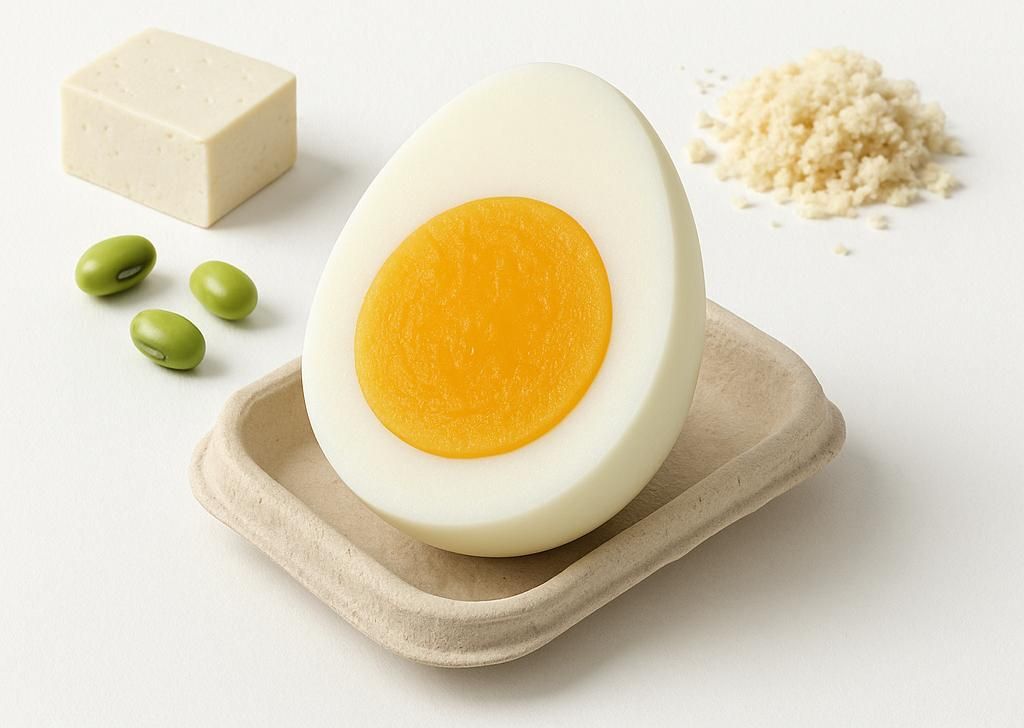
Een doorgesneden plantaardig ei met tofu, sojabonen en okara ernaast
Het plantaardige ei met zijn grondstoffen: sojabonen, tofu en okara — de reststroom uit de sojaverwerking waar het eiwit uit gewonnen wordt. Beeld uit het projectplan.The plant-based egg with its raw materials: soybeans, tofu and okara — the soy-processing residual stream the protein is recovered from. Image from the project plan.
Hoe het werktHow it works

Vijf Nederlandse deelnemers, met name uit Zuid-Nederland, ontwikkelen samen een ei dat in smaak, textuur, uiterlijk en voedingswaarde niet onderdoet voor een kippenei — tegen een marktconforme prijs en aanzienlijk duurzamer geproduceerd.

Het eiwit komt uit okara: de pulp die overblijft na de productie van sojadrank en tofu. Eiwit- en vezelrijk, maar vandaag nog verwerkt tot veevoer. Met de milde scheidingstechnologie van Greencovery wordt daar een functioneel eiwit uit gewonnen. GEA ontwerpt en bouwt de modulaire, geautomatiseerde productielijn; Foodtastic (onderdeel van OTA Food) en Resty ontwikkelen de receptuur en de producttoepassingen en brengen ze naar de markt. Klavier Holding (eigenaar van Kipster) brengt kennis van de eiermarkt in.

Five Dutch participants, mainly from the south of the Netherlands, are jointly developing an egg that matches the hen’s egg in taste, texture, appearance and nutritional value — at a market-level price and produced far more sustainably.

The protein comes from okara: the pulp left over from making soy drink and tofu. Rich in protein and fibre, yet today processed into animal feed. Greencovery’s mild separation technology recovers a functional protein from it. GEA designs and builds the modular, automated production line; Foodtastic (part of OTA Food) and Resty develop the recipes and product applications and bring them to market. Klavier Holding (owner of Kipster) contributes knowledge of the egg market.

Beoogde resultatenIntended results
  • Een geautomatiseerde, schaalbare productielijn voor plantaardige ei-producten
  • Recepturen voor gekookt, scrambled en vloeibaar ei op basis van okara-eiwit
  • Marktklare prototypes voor retail, horeca en foodservice, waaronder een vegan eiersalade
  • Voedingswaarde die voor minstens 80% gelijkwaardig is aan een regulier kippenei
  • Een voetafdruk van 0,87 kg CO₂ en 4,65 liter water per kilo product
  • Gevalideerde voedings-, duurzaamheids- en circulariteitsclaims (LCA, Nutri-Score)
  • Een duurzaam en recyclebaar verpakkingsconcept
  • An automated, scalable production line for plant-based egg products
  • Recipes for boiled, scrambled and liquid egg based on okara protein
  • Market-ready prototypes for retail, hospitality and foodservice, including a vegan egg salad
  • Nutritional value at least 80% equivalent to a conventional chicken egg
  • A footprint of 0.87 kg CO₂ and 4.65 litres of water per kilo of product
  • Validated nutritional, sustainability and circularity claims (LCA, Nutri-Score)
  • A sustainable, recyclable packaging concept
ProjectnummerProject number
STIM-01628
ReferentieReference
25-KIPS02-OPZU-A
LooptijdPeriod
1 januari 2026 – 31 december 2028
PenvoerderLead partner
Foodtastic (OTA Food B.V.)
Totale projectkostenTotal project cost
€ 2.505.074,28
SubsidiebijdrageGrant contribution
€ 1.078.144,59 (43%)

WerkpakkettenWork packages

2026 – 2028
  1. WP1 Projectmanagement & ketenorganisatieProject management & chain organisation Foodtastic Technische en financiële projectleiding, voortgangsrapportage en coördinatie met leveranciers en afnemers.Technical and financial project management, progress reporting and coordination with suppliers and buyers.
  2. WP2 Communicatie, disseminatie & consumentenacceptatieCommunication, dissemination & consumer acceptance Foodtastic · Greencovery Publiciteit conform de OPZuid-EFRO-richtlijnen, vakpublicaties en presentaties, en focusgroepen die voeden in receptuur en markttoepassingen.Publicity under the OPZuid-ERDF rules, trade publications and presentations, plus focus groups feeding into recipes and market applications.
  3. WP3 Grondstoffen, voorbewerking & scheidingstechnologieRaw materials, pre-treatment & separation technology Greencovery Sourcing en kwaliteitsborging van okara, doorontwikkeling en opschaling van de milde scheiding, en karakterisering en stabilisatie van de eiwitfracties.Sourcing and quality assurance of okara, scaling up the mild separation process, and characterising and stabilising the protein fractions.
  4. WP4 Productontwikkeling & receptuuroptimalisatieProduct development & recipe optimisation Foodtastic · Klavier · Resty Receptuur voor gekookt, scrambled en vloeibaar ei, nutritionele verrijking, en afstemming met het lijnontwerp.Recipes for boiled, scrambled and liquid egg, nutritional enrichment, and alignment with the line design.
  5. WP5 Industriële, geautomatiseerde productielijnIndustrial automated production line GEA Lijnontwerp en procesengineering, verpakkingsontwerp, inline kwaliteitscontrole en traceerbaarheid, pilotproductie en procesoptimalisatie.Line design and process engineering, packaging design, inline quality control and traceability, pilot production and process optimisation.
  6. WP6 Markttoepassingen, voedselveiligheid & introductieMarket applications, food safety & introduction Foodtastic · Klavier · Resty Smaaktests en consumentenacceptatie, etikettering en Nutri-Score, LCA en duurzaamheidsclaims, en een go-to-market-schets met ketenpartners.Taste tests and consumer acceptance, labelling and Nutri-Score, LCA and sustainability claims, and a go-to-market outline with chain partners.

DeelnemersParticipants

5 deelnemers · 1 begeleider5 participants · 1 advisor

OPZuid wordt uitgevoerd door Stimulus Programmamanagement. Meer over de begeleider: craeghs.nl. OPZuid is implemented by Stimulus Programmamanagement. More about the advisor: craeghs.nl.

NieuwsNews

1 berichtpost
3 september 20263 September 2026

Kick-off bij Kipster in VenrayKick-off at Kipster in Venray
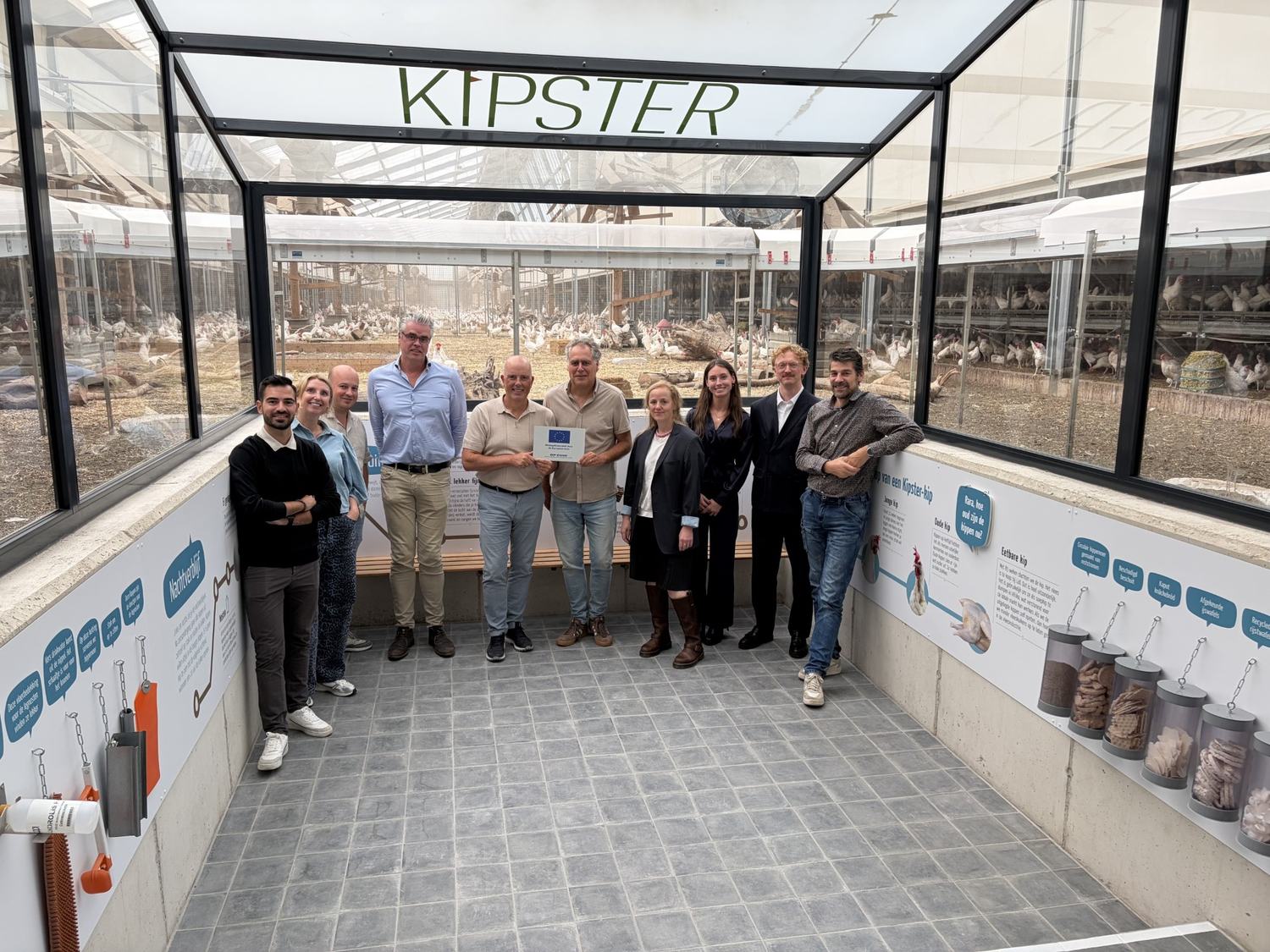
Groepsfoto van de betrokkenen bij de kick-off op de Kipster-boerderij
V.l.n.r.: Aris Amygdalaris (Greencovery), Chaggit Jansen (Stimulus), Styn Claessens (Klavier Holding), Gerben Kiers (GEA), Rutger van Rooijen (Greencovery), Ruud Zanders (Foodtastic – OTA Food), Doreen Westphal (Resty), Isis de Haan (Craeghs), Floris Alberda van Ekenstein (Craeghs), Marcel van Velthoven (Stimulus).

Op donderdag 3 september 2026 kwamen alle betrokken partijen voor het eerst bij elkaar op de Kipster-boerderij in Venray. Tijdens de kick-off is het project formeel van start gegaan en zijn de eerste werkafspraken tussen de werkpakketten gemaakt.

Ook Stimulus Programmamanagement, dat OPZuid uitvoert, was aanwezig, samen met Craeghs Consultancy, dat de projectadministratie begeleidt.

On Thursday 3 September 2026 everyone involved met for the first time at the Kipster farm in Venray. The kick-off formally started the project and set out the first working arrangements between the work packages.

Stimulus Programmamanagement, which implements OPZuid, was present as well, together with Craeghs Consultancy, which supports the project administration.

Europese steunEuropean funding

Vlag van de Europese Unie Medegefinancierd door de Europese UnieCo-funded by the European Union

Het project “Het ei waar geen kip aan te pas komt” wordt medegefinancierd door de Europese Unie, het Rijk en Provincie Limburg in het kader van OPZuid.

De bijdrage komt uit het Europees Fonds voor Regionale Ontwikkeling (EFRO) via OPZuid 2021–2027, het Europees programma voor transitiegedreven innovatie in Zeeland, Noord-Brabant en Limburg. OPZuid wordt uitgevoerd door Stimulus Programmamanagement.

De totale projectkosten bedragen € 2.505.074,28; daarvan wordt € 1.078.144,59 (43%) als subsidie bijgedragen.

De verantwoordelijkheid voor de inhoud van deze website ligt volledig bij de projectpartners. De Europese Unie en de programma-autoriteiten zijn niet aansprakelijk voor enig gebruik van de hier gepubliceerde informatie.

Meer over het programma: stimulus.nl/opzuid-2021-2027 · Europees Fonds voor Regionale Ontwikkeling

The project “Het ei waar geen kip aan te pas komt” is co-funded by the European Union, the Dutch national government and the Province of Limburg under OPZuid.

The contribution comes from the European Regional Development Fund (ERDF) through OPZuid 2021–2027, the European programme for transition-driven innovation in Zeeland, Noord-Brabant and Limburg. OPZuid is implemented by Stimulus Programmamanagement.

Total project cost is € 2.505.074,28, of which € 1.078.144,59 (43%) is contributed as a grant.

Responsibility for the content of this website rests entirely with the project partners. The European Union and the programme authorities are not liable for any use made of the information published here.

More about the programme: stimulus.nl/opzuid-2021-2027 · European Regional Development Fund